SHW Eating Disorders Program
Are you or a friend concerned about your relationship with food and your body?
At Student Health and Well-Being, we have a multidisciplinary treatment team to help support students with eating disorders. This includes social workers, a psychiatrist, psychologists, dietitians, and several primary care providers with experience assisting students who have eating disorders. We understand that eating disorders impact many areas of life and your health, so we work together to ensure that you receive the care that will most support you in your process of recovery. Depending on your specific needs, we may be able to provide focused and goal-oriented care on campus. We may also work with you to connect you with off-campus providers.
Call the SHS Main Line to make an appointment with your physician and ask about the Eating Disorders Program, or call Counseling and Psychological Services Central Office to speak with a counselor and ask about our program.
What Types of Eating Disorders Do You Treat?
Our team has experience treating a myriad of different eating disorders, including but not limited to:
- Anorexia nervosa
- Bulimia nervosa
- Binge eating disorder
- Avoidant/restrictive food intake disorder (ARFID)
- Purging disorder
- Atypical anorexia
We also work with common co-occurring conditions, including body dysmorphic disorder, obsessive compulsive disorder, depression, anxiety, and post-traumatic stress disorder.
What Services Are Offered?
Treatment
Initially, you’ll work with our social worker to determine if our team is the right fit to support your needs. You’ll then have evaluations with our primary care team, one of our therapists, our psychiatrist, and one of our dietitians.
If you and your providers decide to proceed with our team, you’ll have regular treatment with each of your treatment team members. You’ll work with each team member to determine how often you’ll need to meet with them.
You may also be recommended to one of our therapy groups. These groups focus on building skills for understanding and managing emotions effectively, as well as groups that focus on changing the way you view your body.
In general, our team focuses on including cognitive behavior therapy, dialectical behavior therapy, exposure and response prevention, and health at every size approaches.
Services Open to Everyone
CAPS has an exciting workshop opportunity for students struggling with body image, who do not want or need individual therapy. The EVERYbody Project is a body image program created on college campuses by faculty and students. It consists of three weekly in-person 90-minute small group meetings (7-10 people in a group). Through activities, role-plays, writing exercises, and discussion, workshop members will learn different ways to challenge the cultural messages that appearance should fit within a narrow set of "ideals." If you are interested in participating in this activity, please email Allison Wagner, PhD (afwagner@health.ucsd.edu) to get more information.
Be sure to check out the Counseling and Psychological Services (CAPS) website for our most updated workshops and forums focused on body image! These are open for all UCSD students!
Who Are We?
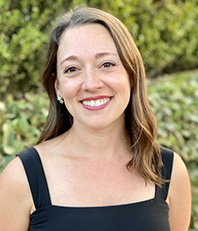 Allison Wagner, Ph.D.
Clinical Psychologist and Eating Disorders Coordinator
Dr. Allison Wagner (Allie) is a clinical psychologist and coordinator of the SHW Eating Disorders Program. She earned her PhD from the University of Hawai‘i at Mānoa. She has expertise in treating the full spectrum of eating disorders at multiple levels of care (outpatient, intensive outpatient, partial hospitalization, acute hospitalization). She additionally has training and experience in treating co-occurring anxiety, depression, and PTSD. She utilizes cognitive behavior therapy, dialectical behavior therapy, exposure and response prevention, cognitive processing therapy, and uses both a feminist psychology and Health at Every Size ® (HAES) lens. In her free time, Allie can be found enjoying the dog beach, at a yoga class, or enjoying a cup of tea with friends.
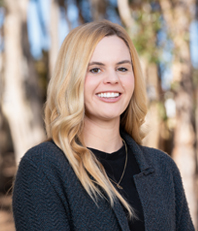 May Rees, MS, RD
Registered Dietitian
May Rees is a registered dietitian with prior experience working in the outpatient, PHP, IOP, and residential levels of care. She earned her undergraduate degree in clinical nutrition from UC Davis and Master’s degree in nutrition for wellness from Bastyr University, San Diego. May is passionate about integrating intuitive eating principles and maintaining a holistic perspective in her work with clients. She strongly aligns with Health At Every Size® (HAES) and strives to provide compassionate, individualized care to each and every person with whom she works. In her free time, you can find May enjoying live music, gardening, traveling, cuddling with her dog, and spending time in the sunshine.
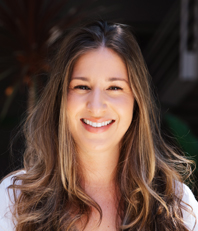 Jenna Richter, RD (she/her)
Registered Dietitian
Jenna Richter (she/her/hers) received her B.S. in Nutrition Science from California State University Northridge. She then completed her dietetic internship and Master's in Dietetics from Iowa State University. Jenna spent the first few years of her career in the inpatient, and long-term care settings in San Diego. Since 2020, and up until joining the UCSD Student Health team in 2025, Jenna worked with both adults and adolescents struggling with eating disorders. Jenna believes in progress over perfection, and that food is not just fuel; it can be a source of joy, cultural connection, and satisfaction to support both mental and physical well-being. In her spare time, Jenna enjoys reading in the sunshine, yoga, travelling, and perfecting her chocolate chip cookie recipe.
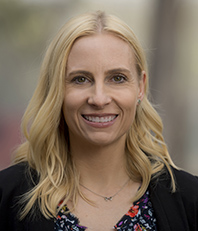 Sarah Bromley, LCSW
Therapist
Sarah Bromley is a Licensed Clinical Social worker with 15 years of experience providing psychotherapy in both inpatient and outpatient treatment programs. Sarah earned her undergraduate degree at California State University, Humboldt and her Master’s degree at California State University, Fresno. She has specialized interest and training in treating body image and eating disorder concerns and is committed to the Health At Every Size ® (HAES) and Intuitive Eating approach. She utilizes Cognitive Behavior Therapy, Dialectal Behavior Therapy, and Mindfulness to provide compassionate person-centered care. In her free time, she enjoys cooking, yoga, going to the beach, traveling with her family and cuddling with her cat.
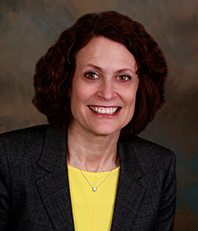 Ellen Heyneman, M.D.
Psychiatrist
Dr. Heyneman graduated cum laude from Yale University (B.S. 1980) and Yale Medical School (M.D.1984 A.O.A.) and completed residencies in pediatrics and psychiatry at Yale-New Haven Hospital. She completed fellowship training in child and adolescent psychiatry at Yale Child Study Center and moved to U.C.S.D. in 1991. She completed board certification in pediatrics, general psychiatry and child and adolescent psychiatry. Dr. Heyneman served as Director of the Residency Training Program in Child and Adolescent Psychiatry at UCSD and Director of the consultation-liaison service at Children’s Hospital and Health Center for over 20 years. Her outpatient clinical practice is specialized in eating disorders, anxiety disorders and mood disorders in children, adolescents as well as college mental health.
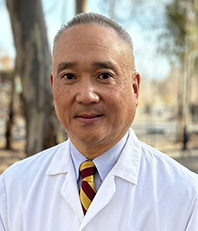 James J. Chun, M.D., FAAP (he/him/his)
Primary Care Physician
Dr. Chun completed his undergraduate and medical studies at Georgetown University in his hometown of Washington, DC. After residency training in pediatrics at Phoenix Children’s Hospital, he focused his clinical interests to the care of teens and young adults, returning to DC to complete fellowship training in adolescent medicine at Children’s National Medical Center, during which time he was commissioned as a medical officer in the United States Navy. Board-certified in adolescent medicine, he has maintained an active medical practice with a focus on preventive and reproductive health, sports medicine, eating disorders, and urgent care, has taught medical students and residents, and held a number of leadership positions including Intern Advisor and Chair of Pediatrics at Naval Medical Center San Diego, and had the honor of deploying overseas in direct support of Marine Corps and Navy combat operations. More recently, Dr. Chun served Interim Medical Director/Lead Physician at Student Health and Counseling Services, Cal State San Marcos (2017-2022), and has been Assistant Medical Director at UC San Diego Student Health Services since January 2023.
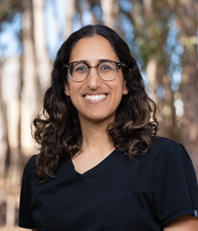 Sabrina Perrino, M.D. (she/her/hers)
Primary Care Physician
Dr. Perrino is on the Executive Board of the American Academy of Pediatrics-CA3 local chapter, co-founder of the San Diego Pediatricians for Clean Air, and former Board Member of the Afghan-American Community Organization. Her medical interests focus on mental health, chronic diseases, dermatology, and sports medicine. In her free time, she enjoys being outdoors with her family.
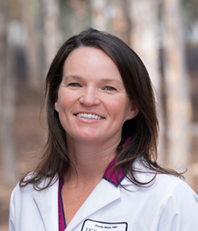 Emily Reid, FNP (she/her/hers)
Family Nurse Practitioner
Emily Reid received her Master of Science in Nursing from University of San Diego. She has years of experience as a primary care nurse practitioner where she focuses on holistic, preventive medicine. She also has a strong background in substance use disorder treatment. Emily came to Student Health Services from outpatient primary care and is passionate about helping students live their healthiest lives. In her free time she enjoys sailing, skiing, traveling and being outside with her dog.
How to Determine if You Have a Problem
Most people go on diets or overeat once in a while. If you think your eating is out of control or that food is playing too big a part in your life, use the questions below to help evaluate your behavior and understand potential problems.
Answer yes or no to the following:
- I constantly think about eating, weight and body size.
- I become anxious before eating.
- I am afraid of becoming overweight.
- I like my stomach to be empty.
- I have gone on eating binges where I felt I might not be able to stop.
- I often feel bloated or uncomfortable after meals.
- I spend a lot of time daydreaming about food.
- I weigh myself several times each day.
- I think about burning calories when I exercise, exercise too much, or get very rigid about my exercise plan.
- I believe that being in control of food shows others that I can control myself.
- I have taken laxatives or forced myself to vomit after eating.
- I eat diet foods.
- I feel extremely guilty after eating.
- I eat when I am nervous, anxious, lonely or depressed.
- I am preoccupied with the thought of having fat on my body.
- Other people think I am too thin.
Look at how you answered - if you think your eating habits are making you sick or just keeping you from enjoying life, it may be time to make some changes. Contact Student Health Services to make an appointment with a physician or dietitian, or call Counseling and Psychological Services to speak with a counselor.
Helping a Friend
If you feel a friend may have an eating disorder, here are some helpful suggestions:
- Talk about your concerns with a professional first: Prepare yourself with reliable information. Learn about eating disorders and find out what resources are available on campus and in the community.
- Talk with your friend: Find a quiet time when you will not be distracted or interrupted. Focus on your concerns about your friend's health, not their appearance or weight. Speak in confidence and keep it informal. Tell your friend how this is affecting your friendship. Share the information you have learned about resources that can help.
- Understand that your help may be rejected: Often people with eating disorders deny they have a problem because they're afraid to admit they're out of control. Don't take this rejection personally, but try to end the conversation in a way that will allow you to come back to the subject at a later time.
- Know when to back off: If you sense you're getting angry or impatient with the discussion, back off. And try not to take on the role of counselor or "food monitor" - that would be inappropriate.